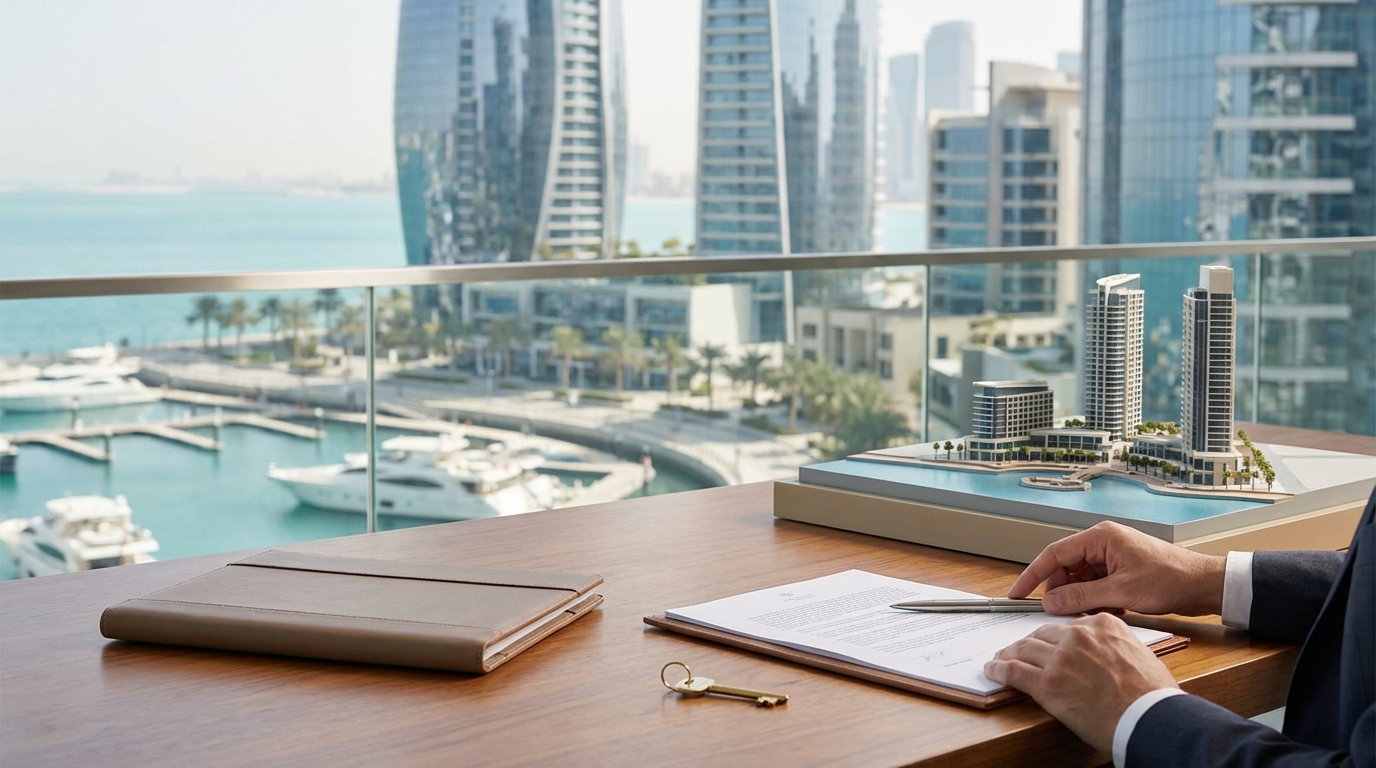
A New Market for International Investors
Historically, property ownership in the Gulf was restricted to nationals. However, Qatar has aggressively liberalized its real estate sector to attract foreign capital.
Cabinet Resolution No. 28 of 2020 formalized the regulations allowing non-Qataris (both residents and non-residents) to own real estate in specific zones.
This initiative not only allows for investment returns but also ties property ownership to residency rights, offering a stable alternative to employment-based sponsorship.
Freehold vs. Leasehold: Where Can You Buy?
The government has divided eligible areas into two categories:
1. Freehold Zones (9 Areas)
In these areas, you own the land and the unit indefinitely (100% ownership). These include:
- The Pearl-Qatar
- West Bay Lagoon
- Al Khor Resort
- Rawdat Al Jahaniyah (near Mall of Qatar)
- Al Qassar (Administrative Area 60)
- Al Dafna (Administrative Area 61)
- Onyiza (Administrative Area 63)
- Lusail
- Al Kharij (Administrative Area 69)
Buying here is like buying property in Europe or the US; you hold the title deed in perpetuity.
2. Leasehold Zones (16 Areas)
In these areas, you are purchasing the “Right to Use” (Usufruct) for 99 years. This effectively functions like ownership but technically the land remains with the state or original owner. These areas include Msheireb, Fereej Abdul Aziz, and Al Sadd.
Residency by Investment
The most attractive feature of the new law is the residency tier system:
- Tier 1 (Investment of QAR 730,000 / ~$200,000):
Owners are granted residency for themselves and their immediate family. This residency remains valid as long as you own the property. You do not need an employer sponsor.
- Tier 2 (Investment of QAR 3,650,000 / ~$1,000,000):
Owners are granted permanent residency benefits (similar to the Permanent Residency Card). This includes free healthcare and education in government institutions, a massive benefit for families.
The Buying Process
Buying property in Qatar is relatively streamlined but requires due diligence:
- Agreement of Sale: Negotiate price and terms.
- Office for Non-Qatari Real Estate Ownership: Located in the Ministry of Justice, this specialized office handles all transfers for foreigners.
- Title Deed Issuance: Once the transaction is approved and fees (usually 0.25% transfer fee) are paid, the title deed is issued.
- Residency Application: With the title deed, you apply to the Ministry of Interior for your ID.
Legal Risks
While the market is regulated, risks exist. Off-plan properties (buying before construction is finished) can face delays. It is vital to review the Sale and Purchase Agreement (SPA) to ensure there are penalty clauses for delayed handover and that the developer is escrow-compliant.
Our firm assists clients from the initial contract review to the final title deed registration and residency application.